What is suan cai yu?
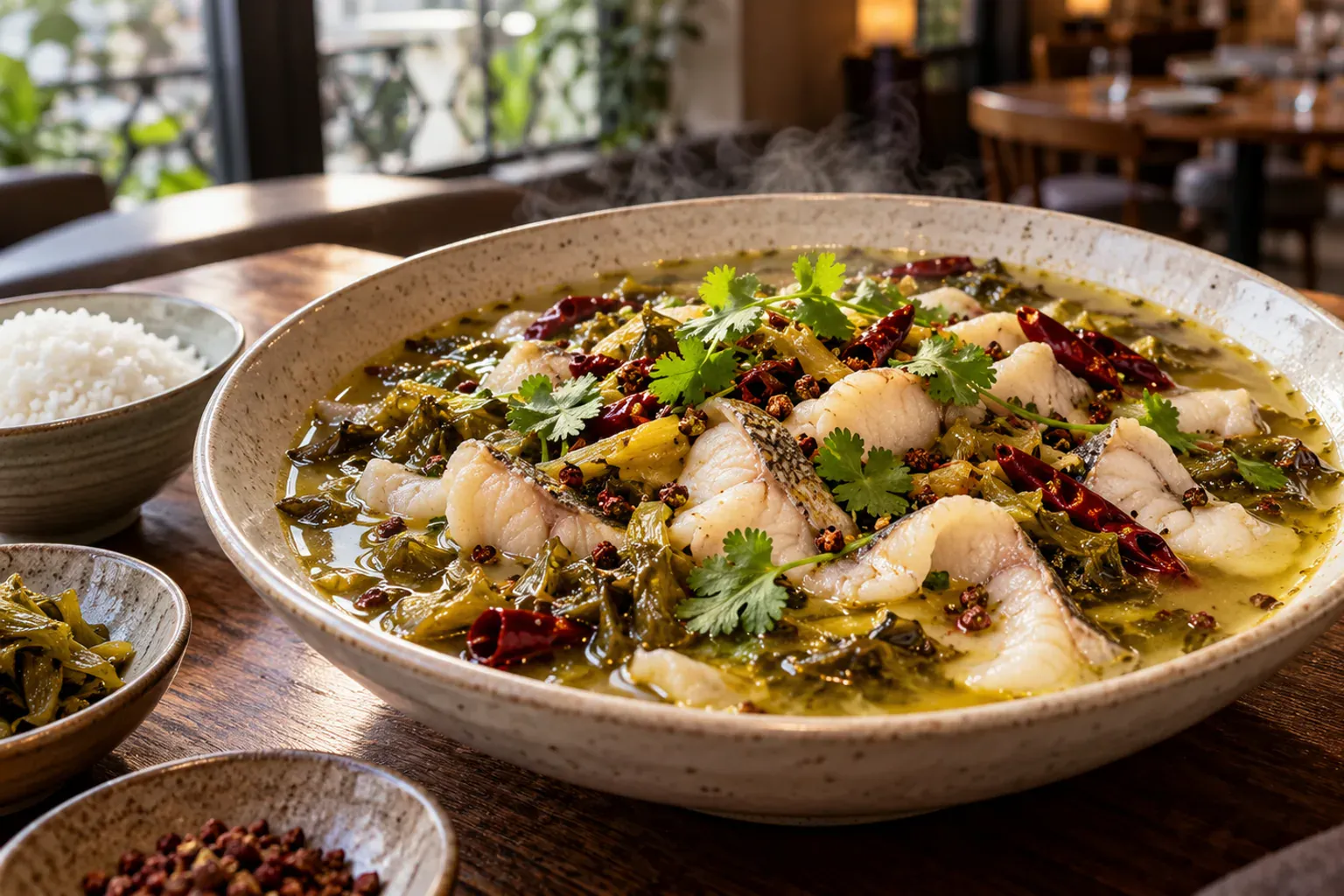
Suan cai yu is fish poached in a broth of fermented greens, spiced with chilli and Sichuan pepper — lively, sour and comforting, nothing like a heavy sauerkraut dish.
Literally: 酸 (sour) 菜 (vegetable) 鱼 (fish)
The name reads like a recipe: sourness, the vegetable, the fish.
The natural acidity born from fermentation.
Fermented Chinese mustard greens.
Thinly sliced white fish, poached at the last minute.
From Chongqing and Sichuan to all of China
Usually linked to Chongqing and Sichuan, its exact history is uncertain; it has spread widely across China in recent decades.
Suan cai, the Chinese “sauerkraut”
“Sauerkraut” is the closest French word for a lacto-fermented leafy vegetable — but it misleads on taste and use.
Lacto-fermented Chinese mustard
Broad-leaf mustard greens ferment in brine for days or weeks; lactic bacteria create a clean, round acidity and keep the crunch.
Sichuan suan cai
Fermented mustard greens in brine: bright acidity, crunchy, used to flavour the broth.
Alsatian sauerkraut
Shredded white cabbage fermented with dry salt: milder, soft, served as a side.
Why acidity balances chilli
The sourness cuts through the heat, refreshes the palate and brings out the sweetness of the fish.
What’s in the bowl
Three steps: prepare the fish, build the broth, finish with hot oil.
The fish: thin white slices, velvety starch coating
Firm white fish sliced thin, coated in egg white and starch so it stays silky.
The broth: suan cai, dried chillies, Sichuan pepper, garlic, ginger
The pickled greens are stir-fried with aromatics, then simmered before poaching the fish.
Finishing with hot oil over the aromatics
Smoking oil is poured over garlic, chillies and pepper on top of the bowl, releasing their aroma.
Coat thin slices of white fish with egg white and starch.
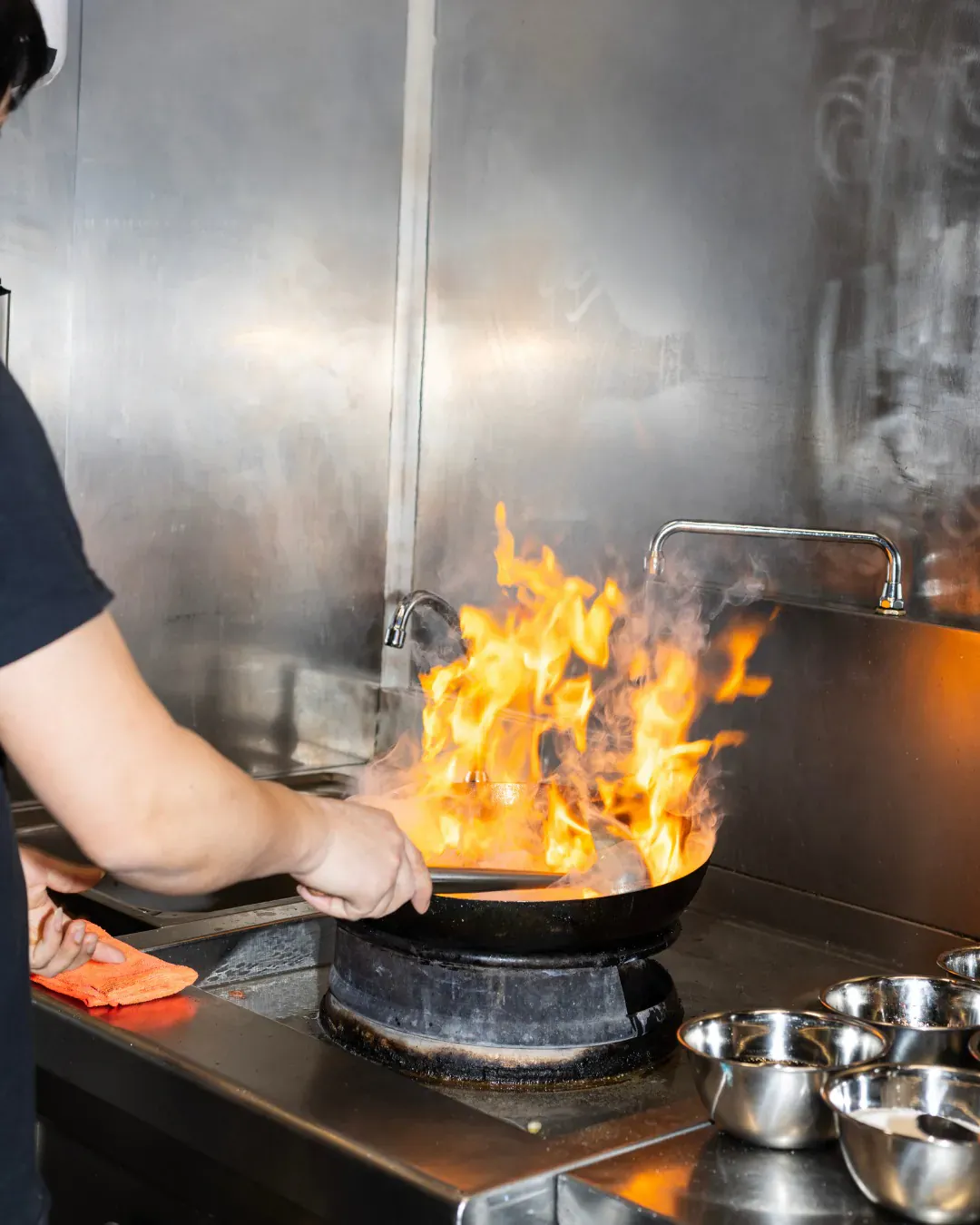
Fry rinsed suan cai with garlic and ginger, add water, simmer; poach the fish, then pour hot oil over the spices.
A simplified base, not a restaurant recipe.
Suan cai yu, hot pot, shui zhu yu: telling them apart
Three Sichuan dishes, three different stories. For the cook-it-yourself pot, see our guide to Sichuan hot pot.
| Criterion | Suan cai yu (酸菜鱼) | Hot pot (火锅) | Shui zhu yu (水煮鱼) |
|---|---|---|---|
| Broth | Fermented greens, sour | Mala or clear broth | Very spicy, oil-topped |
| Heat | Moderate | Variable, often strong | High |
| Serving | Arrives ready in a bowl | Cooked at the table | Arrives ready |
| Sharing | Shared bowl with rice | Long group ritual | Shared, for chilli lovers |
In hot pot you cook; in the other two you eat a finished dish. See also our guide to Chinese restaurants in Paris.

The taste: what to expect
Sour first, then a gentle chilli heat and sometimes the tingle of Sichuan pepper. The silky fish brings sweetness: spicy, but not necessarily burning.
How to enjoy it
It arrives large and steaming, set in the middle of the table.
With plain rice, shared at the centre of the table
Rice soaks up the broth and tempers the heat; everyone helps themselves.
How many people, which starters
Ideal for two or three with other dishes; pair with fresh or steamed starters.

Drinks for acidity and heat
Hot tea, a light cold beer, an aromatic white wine or sparkling water.
酸菜鱼 = fish, delicate. 酸菜牛肉 = beef, rounder. Same broth.
The beef version: 酸菜牛肉, for non-fish eaters
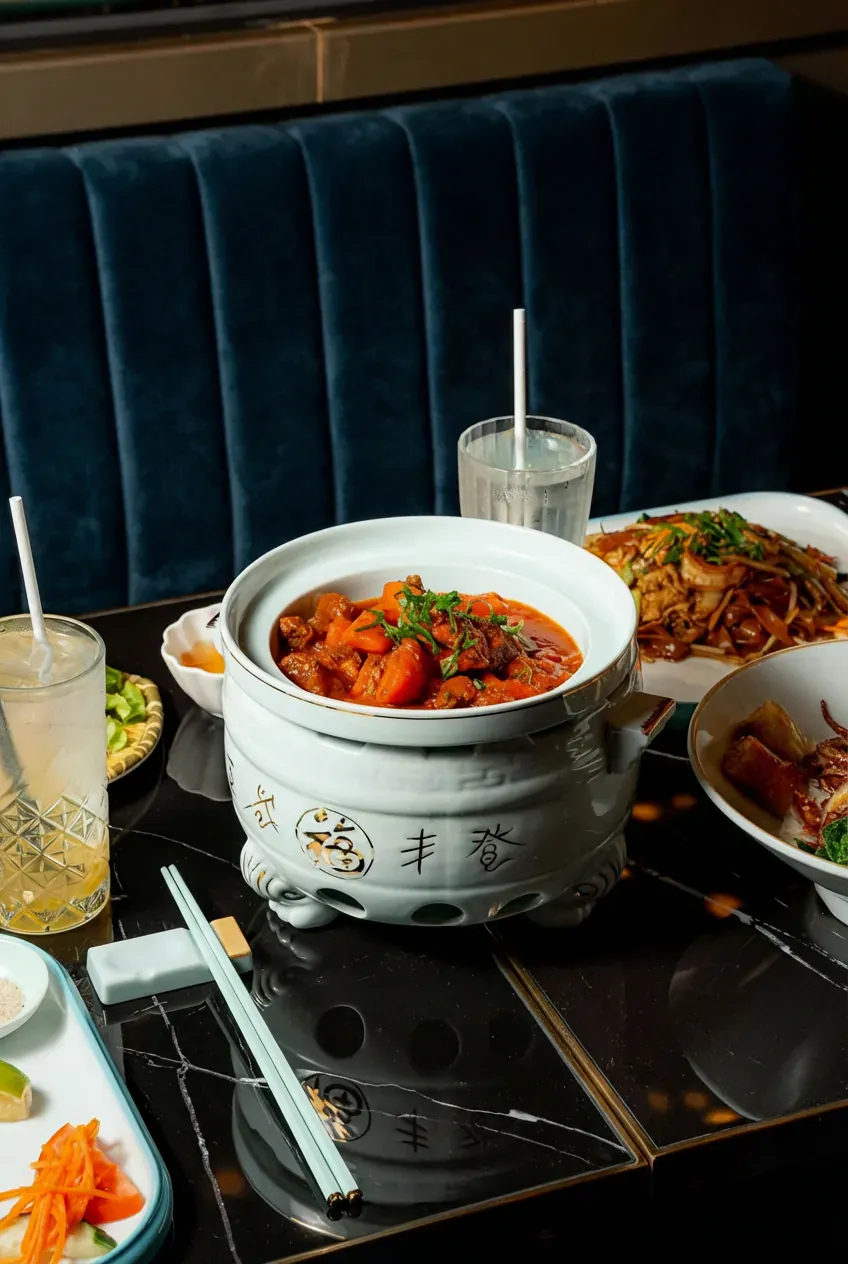
Same sour, spicy broth with thin slices of beef — rounder in taste. Also on the Phở 98 evening menu.
Suan cai yu on Faubourg Montmartre: how Phở 98 serves it at night
At Phở 98, 45 rue du Faubourg Montmartre, Paris 9, suan cai yu is one of our evening Sichuan dishes, served to share. Browse the menu and book on TheFork.