Phở xào (pho xao): stir-fried phở, the little-known side of Vietnamese noodles.
Everyone knows phở as a soup. Almost nobody knows phở xào: the same rice noodles, wok-fried, glossy and fragrant, with no broth at all.
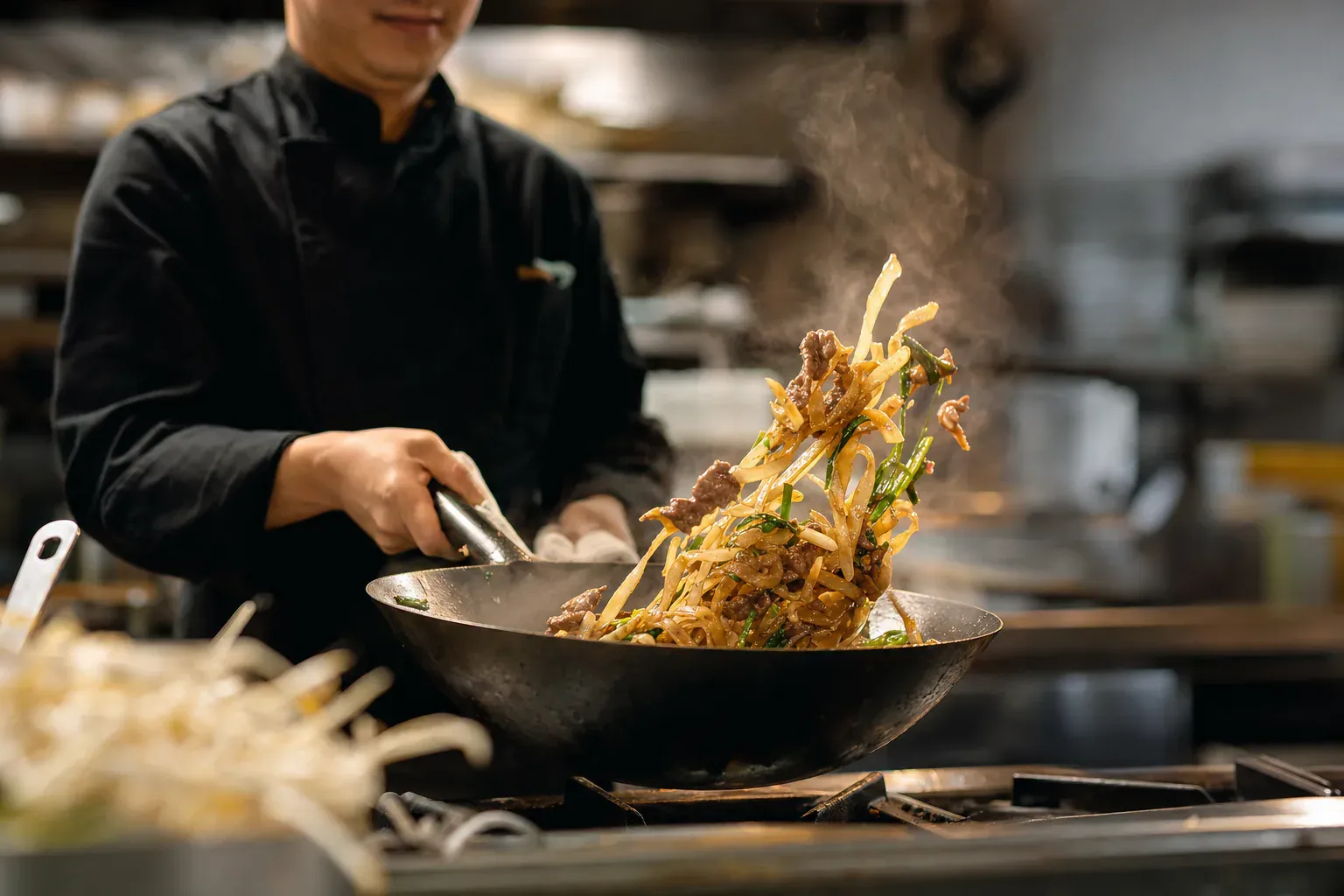
Phở xào is a Vietnamese dish of flat rice noodles (bánh phở), the same as in phở soup, but stir-fried in a wok instead of served in broth. “Xào” means “stir-fried”: it is a dry dish, not a soup. It usually features beef or chicken, crunchy vegetables, fish sauce and soy sauce, with the smoky “wok hei” flavour.
What is phở xào?
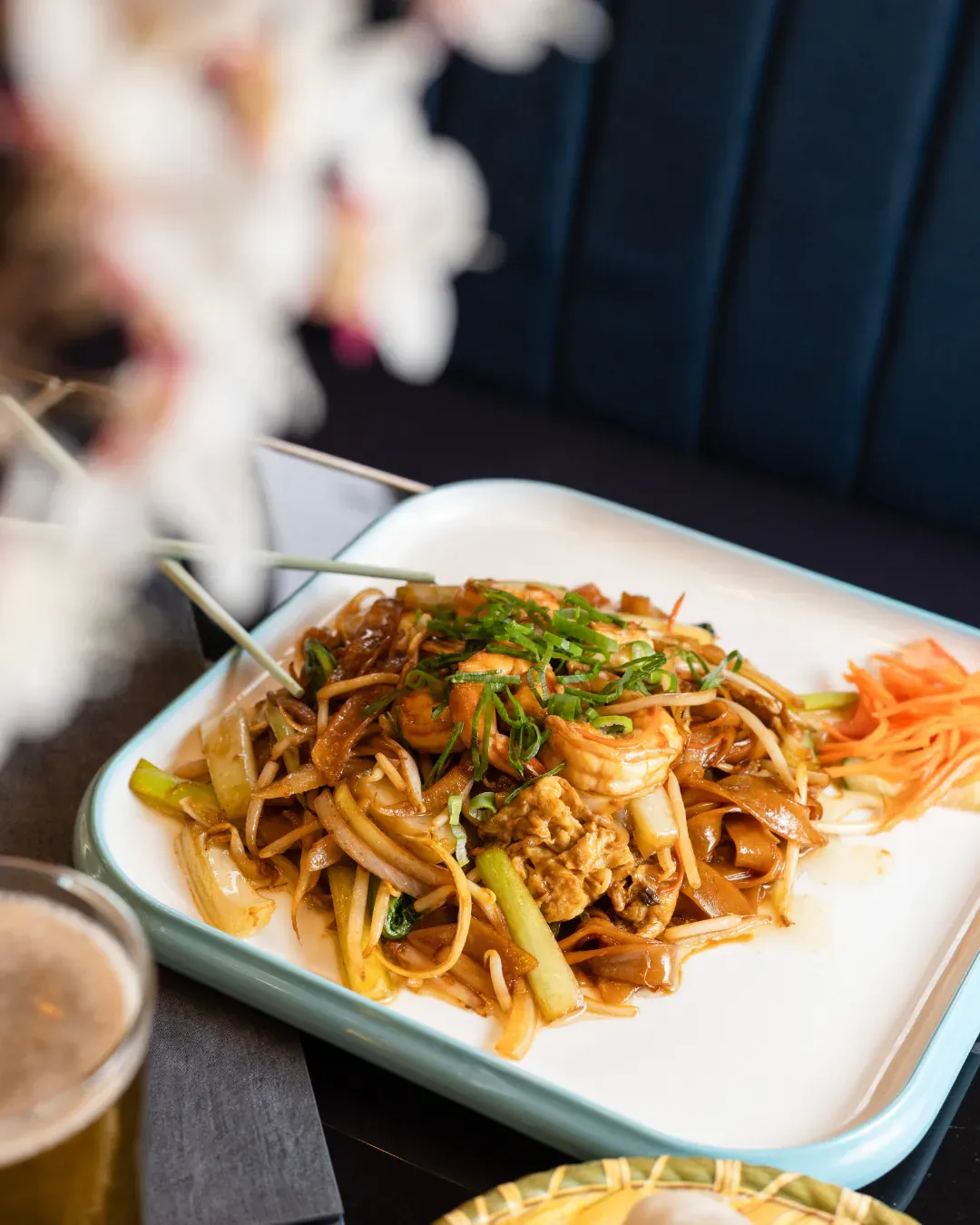
Phở xào is phở without broth: the flat rice noodles of phở, wok-fried with meat, vegetables and sauces, and served on a plate.
A street-food staple in northern Vietnam, it remains little known in France, where it often hides on menus as “stir-fried rice noodles”.
What does phở xào mean?
“Phở” is the flat rice noodle and the dish; “xào” means “stir-fried”. Phở xào literally means “stir-fried phở”.
Without accents it is often typed “pho xao”. A crispy variant, phở áp chảo, pan-fries the noodles into a cake.
Phở xào vs phở soup: telling them apart
Phở xào is not a soup: no broth, eaten with chopsticks only.
Wok-fried noodles are firmer and slightly caramelised; the flavour comes from sauces and the heat of the wok rather than spiced broth.
At a glance
The key differences between phở soup and phở xào.
| Criterion | Phở soup | Phở xào |
|---|---|---|
| Cooking | Noodles served in broth | Noodles wok-fried on high heat |
| Serving | Deep bowl | Flat plate |
| Texture | Soft, slippery | Firmer, lightly caramelised |
Typical ingredients of phở xào
Few ingredients, each with a role.
Bánh phở, flat rice noodles
The same noodles as in phở soup, which absorb the sauce without breaking.
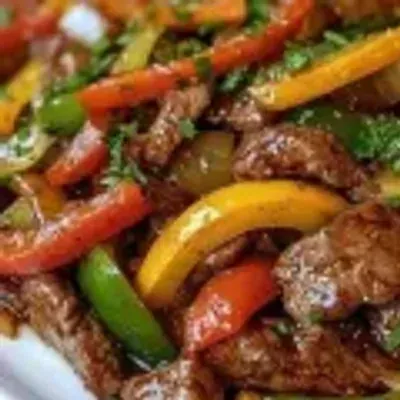
Beef or chicken
Thin slices seared in seconds; prawns, duck or vegetables also appear.
Crunchy vegetables
Onion, spring onion, carrot, pak choi and bean sprouts, barely cooked.
Sauces: fish sauce, soy sauce
Nuoc mam for depth, soy sauce for colour and roundness.
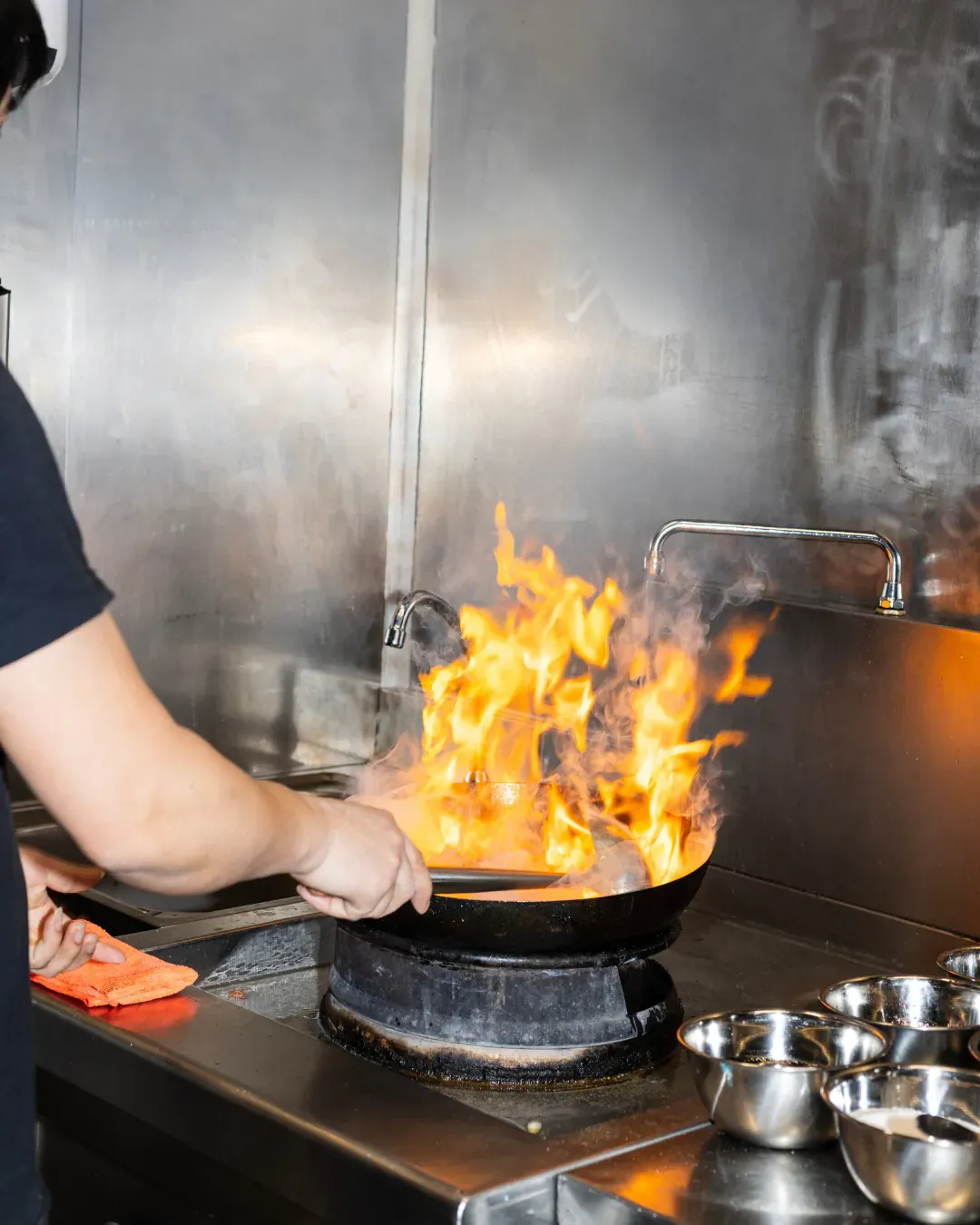
Wok hei, the soul of phở xào
“Wok hei”, the breath of the wok, is the smoky, grilled flavour of food tossed in a very hot wok.
It takes a powerful flame, a precise order of ingredients and constant tossing: a few minutes that make all the difference.
How to eat phở xào
Eat it hot, straight from the wok, with chopsticks. Adjust with chili sauce or lime.
A complete dish on its own, it pairs well with fresh spring rolls.
Phở xào, bò bún, stir-fried noodles: the Vietnamese noodle family
Phở xào shares its flat noodles with phở soup; for beef variations, see our guide on phở bò and phở tái.
Bò bún uses thin round vermicelli served cold: read about the difference with bobun.
It also belongs to the wider family of Asian stir-fried noodles, set apart by its wide rice noodle.
phở bò or phở tái: the real differencethe difference with bobun
Where to try Vietnamese noodles in Paris 9th
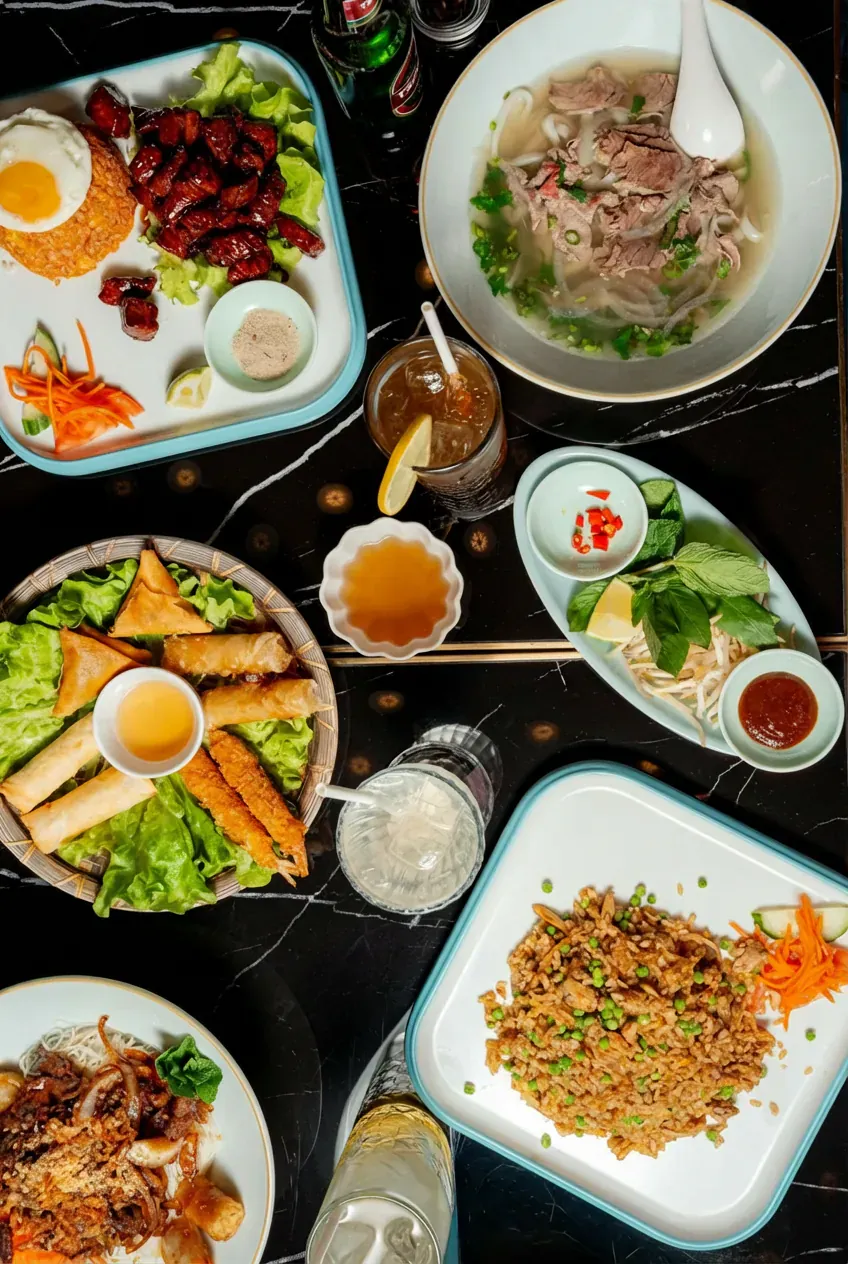
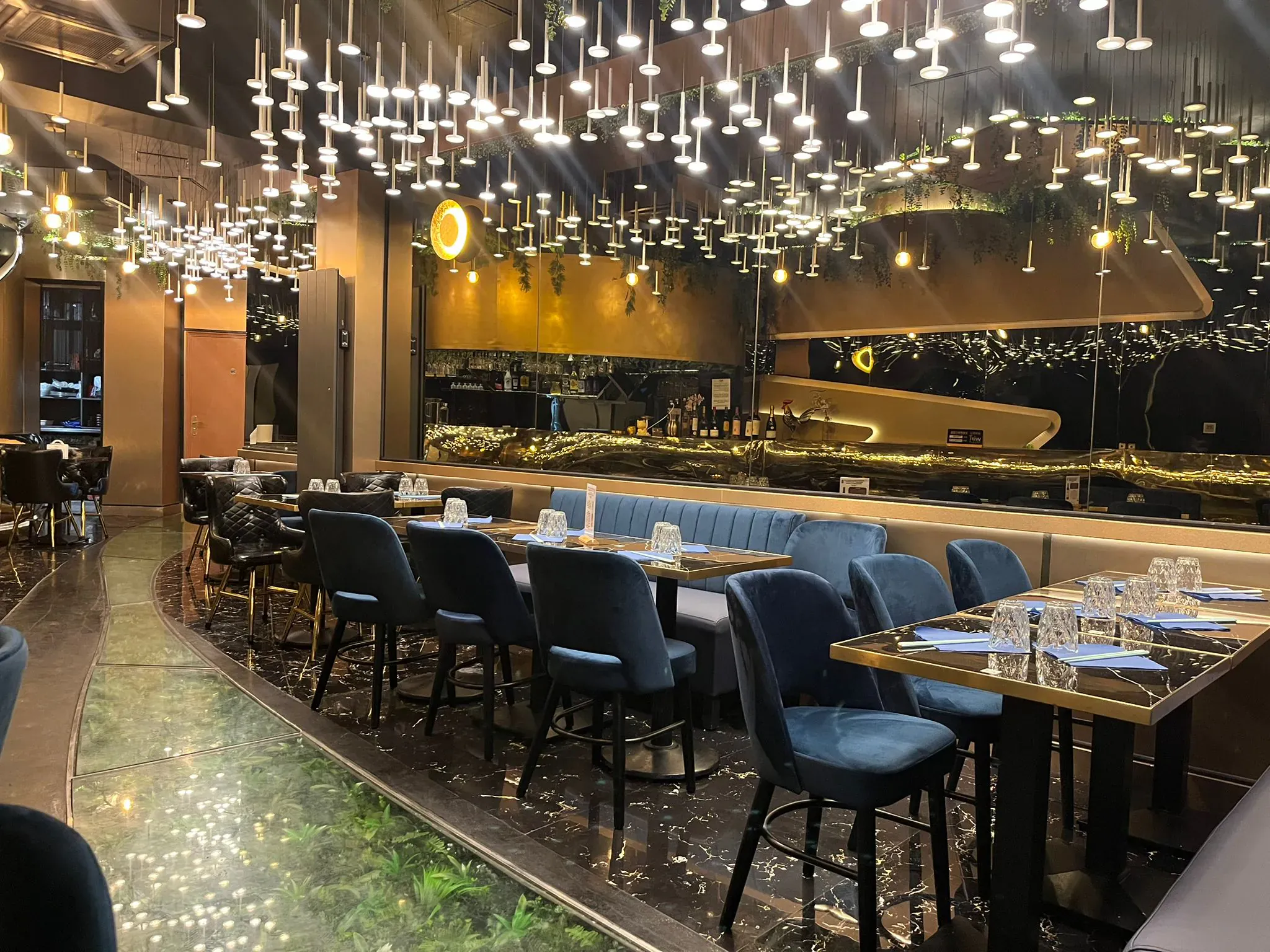
At Phở 98, 45 rue du Faubourg Montmartre, our menu offers stir-fried rice noodles with beef, chicken, prawns, roasted duck, satay beef or vegetables, in the spirit of phở xào.
Phở xào: frequently asked questions
What does phở xào mean?
“Stir-fried phở”: phở rice noodles tossed in a wok.
Is phở xào a soup?
No, it is a dry dish with no broth.
How is it different from classic phở?
Same noodles, but wok-fried instead of served in broth.
How is it different from bobun?
Bobun uses thin vermicelli served cold; phở xào uses flat noodles served hot.
What are its ingredients?
Flat rice noodles, beef or chicken, vegetables, fish sauce and soy sauce.
What is wok hei?
The smoky flavour given by a very hot wok.
Where to eat stir-fried rice noodles in Paris 9th?
At Phở 98, 45 rue du Faubourg Montmartre.
Go further
Discover our whole kitchen on our restaurant vietnamien paris page.