
Peking or Cantonese lacquered duck: what are the differences, and how to eat it?
One name, at least two very different traditions: ceremonial Peking duck in thin pancakes, and everyday Cantonese roast duck on rice or noodle soup.
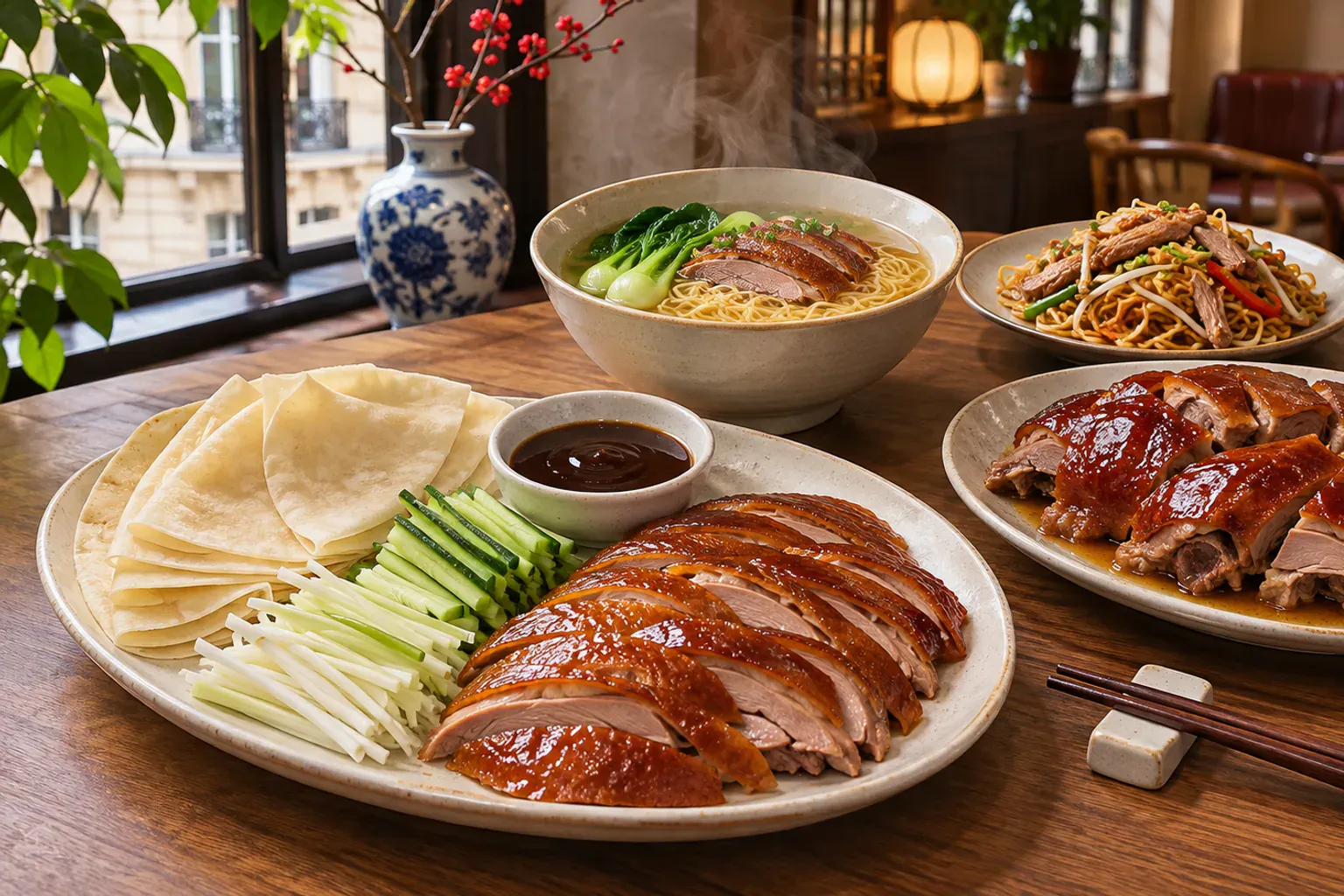
Peking duck (北京烤鸭) and Cantonese roast duck (烧鸭) both have glossy, crispy skin but are distinct dishes. Peking duck has its skin separated by inflation, is dried and roasted, then sliced and rolled in pancakes with sweet bean or hoisin sauce, spring onion and cucumber. Cantonese duck is seasoned inside with five-spice, glazed with maltose and eaten daily on rice or in noodle soup. Both also work in wok-fried noodles.
What is lacquered duck?
The principle: dried, glazed, roasted skin
The duck is scalded, glazed with maltose or honey, air-dried for hours, then roasted hanging so the fat renders and the skin turns crisp and glossy.
Where does “lacquered” come from?
In Chinese it is simply “roast duck”; “lacquered” is a French image for the shiny skin, used for several different dishes.
Peking duck (北京烤鸭)
The festive, ceremonial one, shared at banquets.
Imperial origins
Long associated with court cuisine and perfected in Beijing; exact dates remain debated.
Inflate, dry, roast
Air separates skin from flesh before drying and roasting in a hanging or closed oven.
The service
Thin slices rolled in pancakes with sweet bean or hoisin sauce, spring onion and cucumber.
Cantonese roast duck (烧鸭)
Inner marinade, maltose-glazed skin
The cavity is filled with five-spice, star anise, ginger and garlic; the skin is glazed with maltose and vinegar.
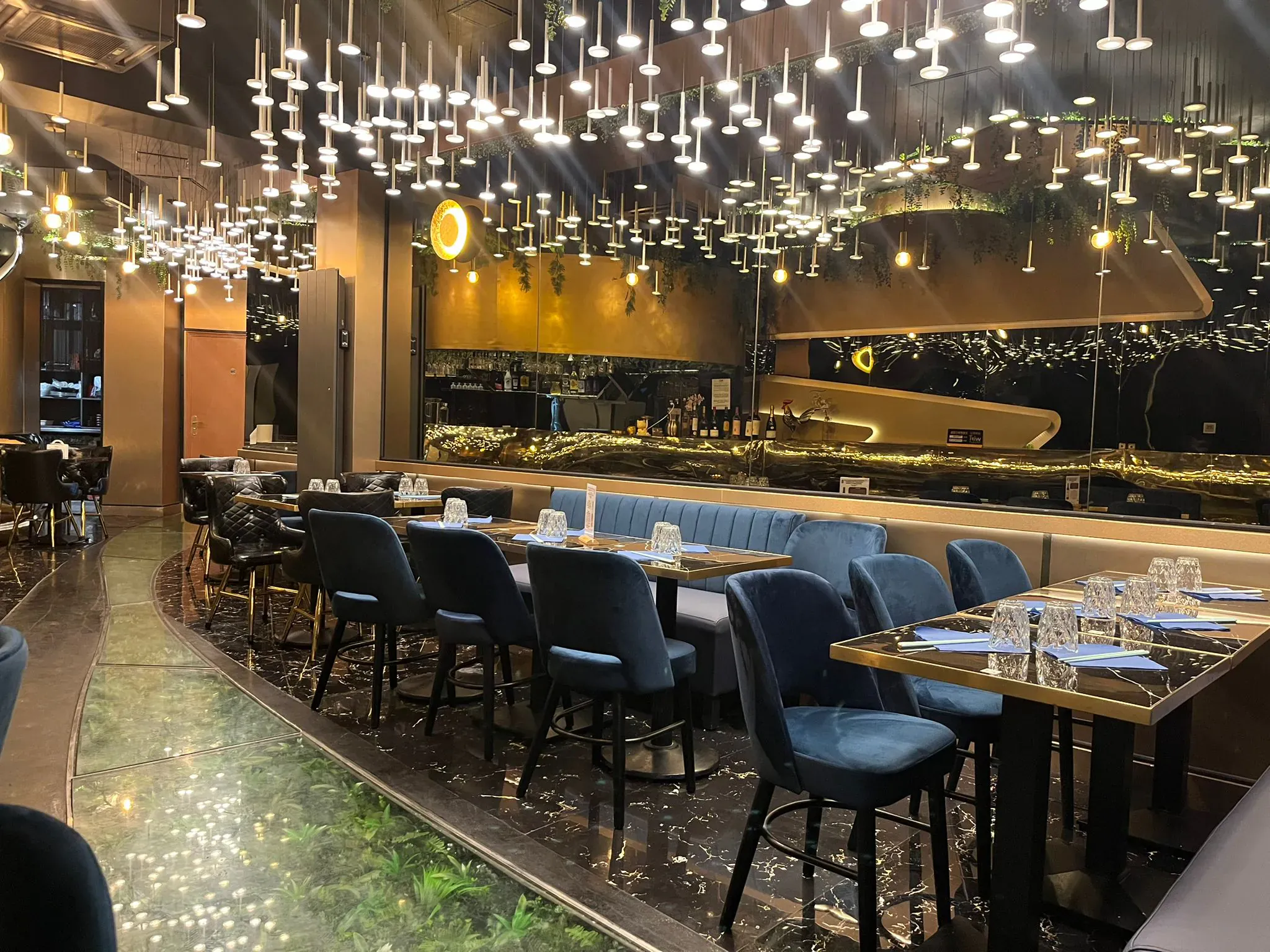
An everyday duck
Hung in roast-meat shop windows, chopped with bones, served on rice or in noodle soup.
Comparison table: Peking or Cantonese
The key differences, criterion by criterion.
| Criterion | Peking duck | Cantonese duck |
|---|---|---|
| Seasoning | Mostly outside | Inside marinade, five-spice |
| Serving | Pancakes, sauce, spring onion | On rice, in soup, stir-fried |
| Occasion | Feast, banquet | Everyday meal |
How to eat lacquered duck
Rolled, in broth or wok-fried.
In pancakes, step by step
- Spread a little sauce on a warm pancake.
- Add duck, spring onion and cucumber, then roll and eat by hand.
In noodle soup
Hot broth meets crisp skin: eat the skin first, then let the rest soften. See also our guide to Vietnamese soup.
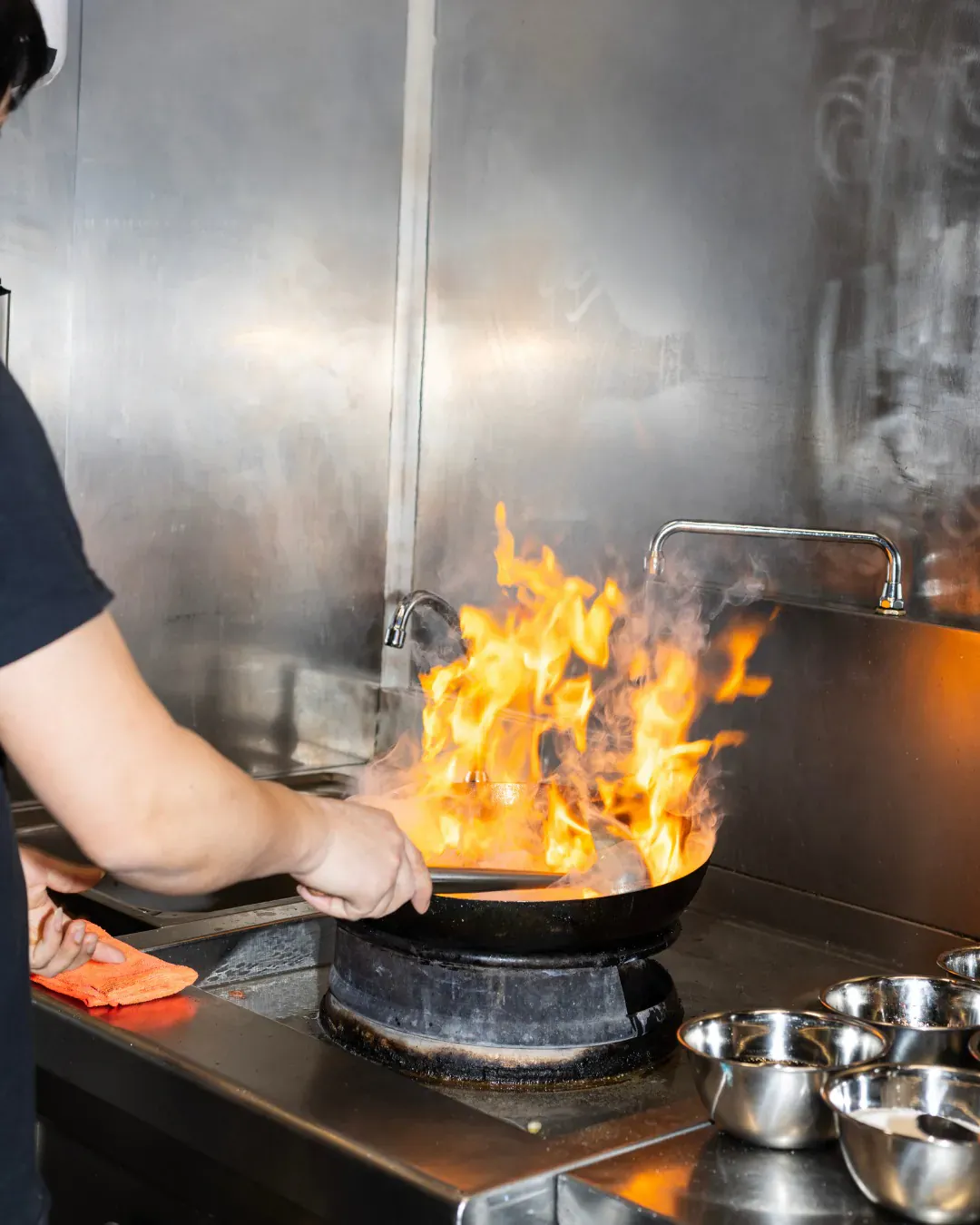
Wok-fried with rice or wheat noodles
Sliced duck tossed in a hot wok coats the noodles with its fat and spices.
Rice or wheat noodles with duck?
Rice noodles are soft and light; wheat noodles are chewier and hold up to the fat. For the Vietnamese stir-fry, see phở xào, wok-fried phở.
Choosing good lacquered duck
Three criteria are enough.
Dry, glossy skin
Taut and evenly amber.
Juicy meat
Moist and tender.
Well-rendered fat
A thin melting layer only.
Aroma matters too: spiced for Cantonese, clean roast flavour for Peking.

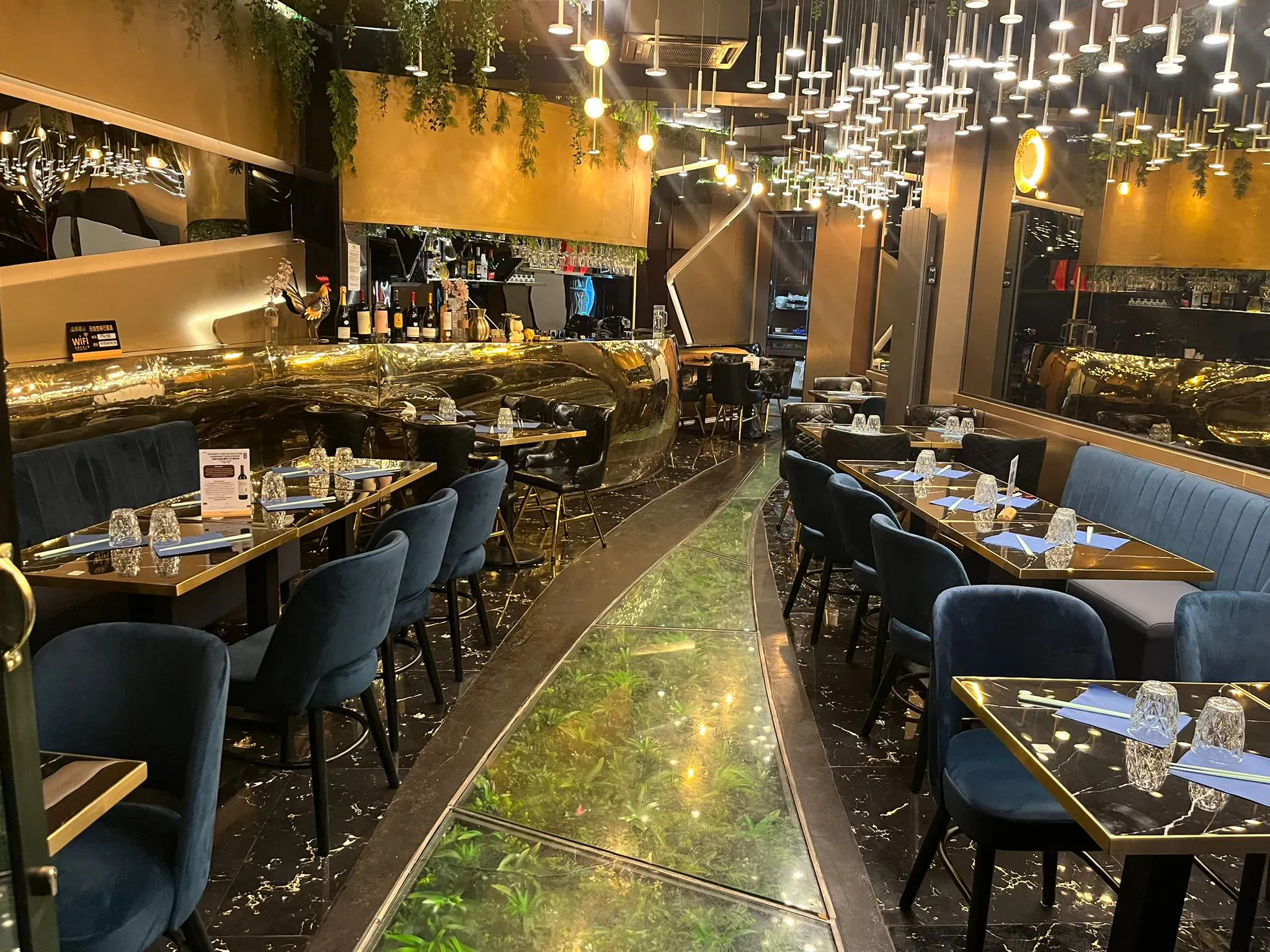
Lacquered duck at Phở 98: soup S8 and stir-fried noodles P1
At 45 rue du Faubourg Montmartre, S8 is a rice or wheat noodle soup with lacquered duck, and P1 stir-fried rice or wheat noodles with lacquered duck.
Both are served in the restaurant or to take away, within a menu of Chinese and Vietnamese cuisine in the 9th. You can also order takeaway.
Lacquered duck: FAQ
Are Peking and Cantonese duck the same dish?
No: Peking duck is served in pancakes, Cantonese duck is marinated inside and eaten on rice or in soup.
Why is the skin so crispy?
It is scalded, glazed and air-dried before roasting.
Does it reheat well for takeaway?
Yes, in a hot oven or dry pan, not the microwave.
Which sauce goes with it?
Sweet bean or hoisin for Peking; its own juices for Cantonese.
Is it fatty?
Hanging roasting renders much of the fat.
Can I make it at home?
A simplified version, yes: scald, glaze, dry overnight, roast on a rack.
Go further
Discover our whole kitchen on our restaurant asiatique paris page.